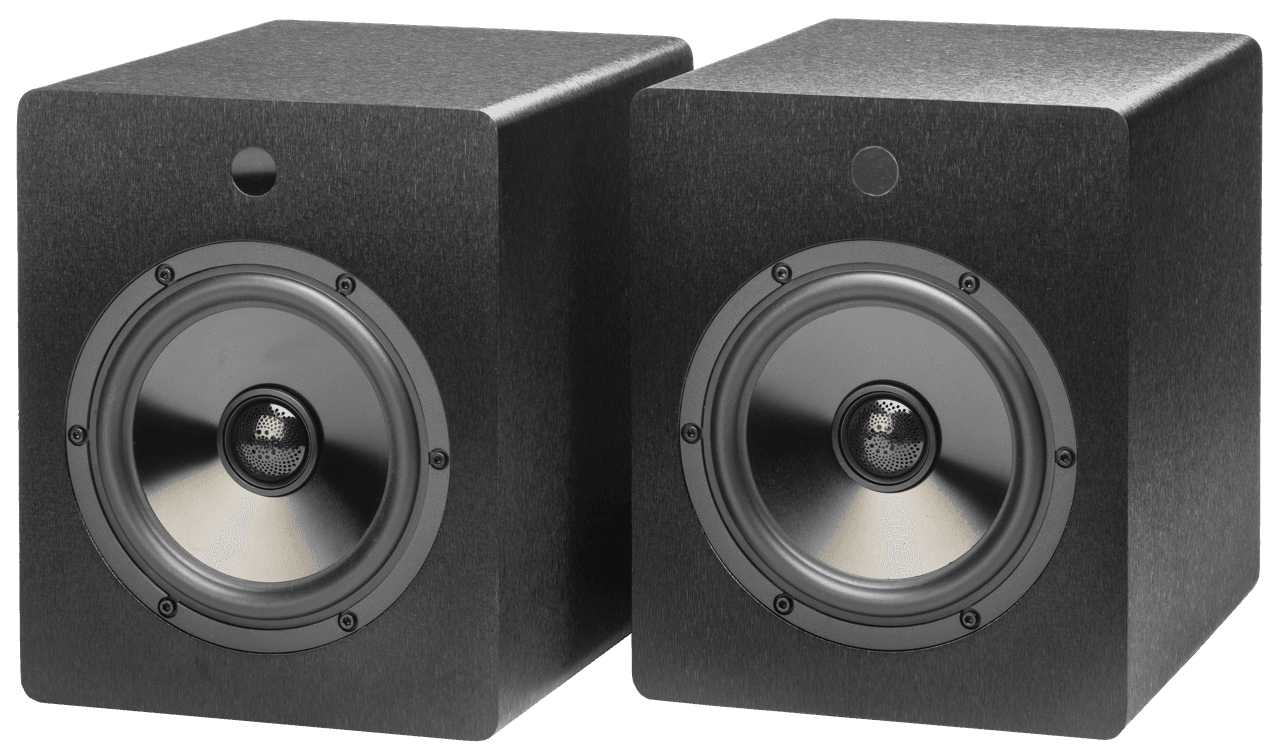
For quiet listening, one stereo pair placed close to where you sit beats a bigger system turned down. A pair of speakers close to your ears lets you hear voices and detail at a low volume, so you never need to turn it up to be heard. That is the whole idea, and the rest is placement and a few simple habits.
Why does a quiet room need a different setup?
At low volume, your ears hear less of the bass and the quietest details. Speakers placed far away or in a corner make this worse, because you turn them up to compensate and the neighbours hear it first.
The fix is distance, not power. Sit close to a small pair and a whisper-level volume still sounds clear. This is why a modest pair suits a bedroom, a desk or a shared flat better than something built to fill a big room.
Where should the speakers go for low-volume listening?
Keep them near you, and keep them level with your ears.
On a desk or shelf at ear height. Sitting close to the pair means a lower volume does the same job. Our guide to setting up speakers on a desk has the details.
A little way from the wall. Walls behind a speaker boost the bass, and that boom is what travels through the wall to the next room. A hand’s width or more of space helps.
Angled slightly towards you. A gentle turn inwards makes voices clearer without adding volume.
On furniture, not the bare floor. A shelf or stand carries less thump into the floor of a shared building than a speaker standing directly on it.
Our article on where speakers should be placed covers the triangle layout that works for most rooms.
Do you need a big system for a small room?
No. One pair is enough, and a small room fills easily. A compact pair with a modest RMS rating has plenty in reserve at the level you will actually use. RMS is the figure to compare, because it describes what a speaker can sustain. Our explainer on RMS against peak watts shows why.
If you want a fuller picture of how little you need, our simple home audio setup guide walks through it, and choosing speakers for a small room covers sizing.
Which uStream speakers suit a quiet room?
You do not have to buy anything to follow this advice, but two uStream pairs fit the idea well.
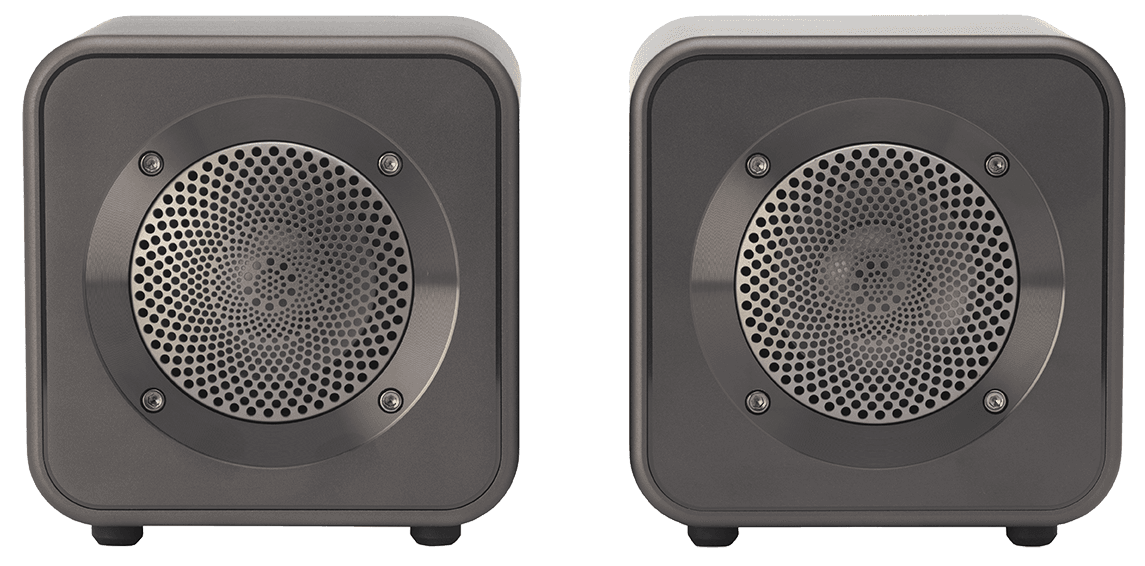
uStream Cube is a compact pair of true wireless stereo speakers, 70W RMS for the pair, with no cable between them, so there is no lead to run across a bedroom floor. uStream Go is a portable pair with a 3.5mm input, 30W RMS for the pair and no cable between the two speakers, which makes it easy to move from a desk to a bedside. You can see the whole range on our uStream products page.
What habits keep a shared home peaceful?
Equipment helps, but habits do more.
Set the volume before you sit down, not after. Start low and raise it only until voices are clear.
Use a lower level late at night. Quiet passages in music get lost first, so pick something with an even level for late listening.
Keep speakers off shared walls. Put them on the wall that backs onto your own space, not the neighbour’s bedroom.
Choose a listening spot, then stay in it. Moving about the room means you turn it up to cover the distance.
Soft furnishings help. Curtains, rugs and a sofa soak up reflections, so you hear the speakers more directly and can leave the volume down. Our piece on what makes a room sound calm goes further.
Frequently asked questions
How do I listen to speakers quietly without losing detail?
Sit close and keep the pair at ear height. Close listening carries voices and detail at a low volume, so you do not need to turn the level up to hear them.
What size speakers are best for a bedroom?
Small ones. A compact pair has enough power for a bedroom, and it is easier to place near your seat on a shelf or desk. Our guide to choosing speakers for a small room has more.
Will speakers disturb my neighbours at low volume?
Much less than you might expect, especially if they sit on furniture rather than the floor and away from a shared wall. Bass travels furthest, so keeping speakers off the wall and floor is the biggest help.
Do I need two speakers for quiet listening?
Yes if you can. A stereo pair puts voices and instruments in front of you, so you hear more at a low level than from a single box.
Follow Mitchell Acoustics on Facebook, Instagram, YouTube, X, Threads, Pinterest, LinkedIn and TikTok for new uStream guides, setup films and listening tips.