
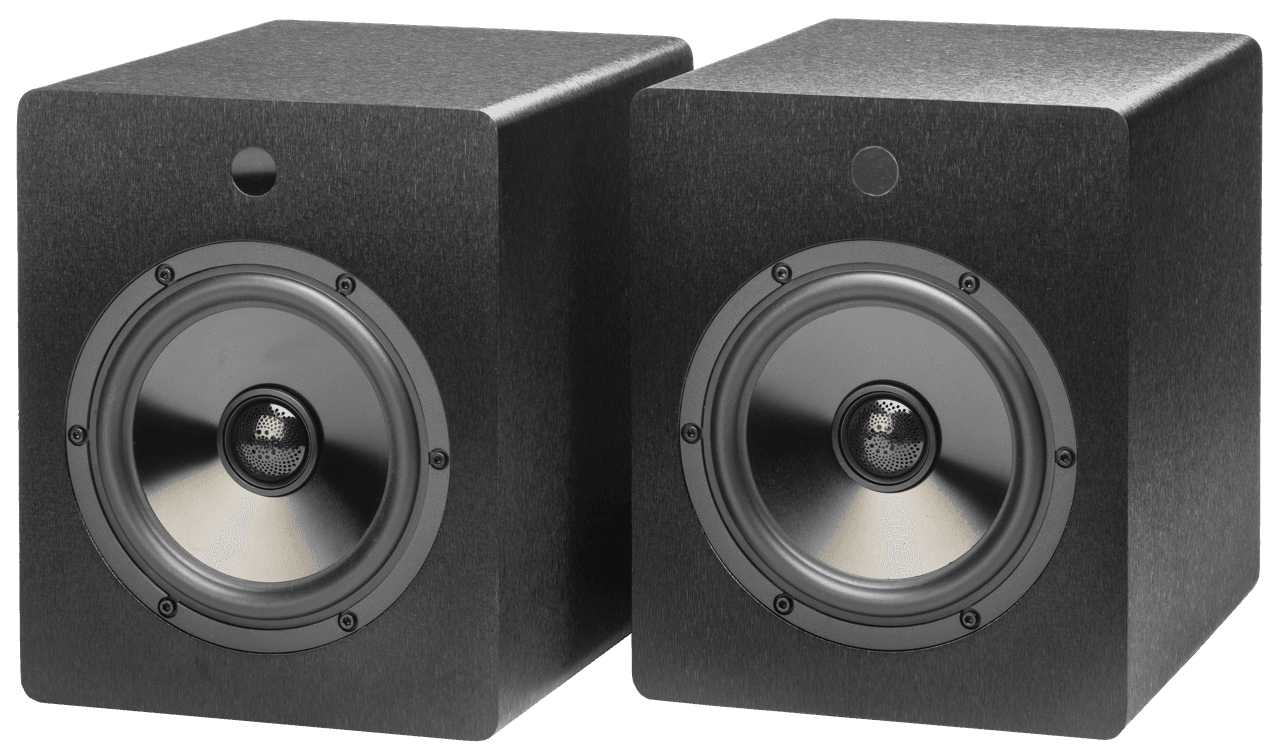
Yes, you can mount bookshelf speakers on a wall, but only if the speaker has a mounting point such as a threaded insert or keyhole slots on the back, or you use a bracket made for that speaker. Never hang a speaker from adhesive hooks or a loose shelf. The sound changes too: a wall-mounted speaker gets more bass and a slightly different tone than one on a stand, so a few small adjustments are worth making.
Does the speaker need to be designed for wall mounting?
Check the back of the cabinet and the manual first. Some bookshelf speakers have keyhole slots or a threaded socket on the rear, and the maker will say whether they are meant to carry the speaker’s weight. If you can’t find either, the speaker was not designed to hang, and you should not improvise.
The alternative is a dedicated speaker bracket, rated for a maximum weight. Pick one rated well above the weight of a single speaker. A falling speaker can hurt someone, so treat the fixing as the most important decision in the job.
What changes when a speaker sits on a wall?
Low frequencies spread in every direction, so a speaker close to a wall gets help from the wall. The closer it sits, the more bass it produces in the room. We cover the reason in our guide to how far bookshelf speakers should be from the wall.
On a wall, three things matter most.
More bass, less tidy. With the back of the cabinet almost touching the wall, bass is stronger but can sound heavier and slower. That suits some small rooms and some music, but it can swamp voices.
Port position. A rear-ported speaker pushes air out of the back, straight into the wall. That can make bass boomy. A front-ported or sealed speaker copes much better. If you have a rear port and no other choice, fit the foam bung if one came with the speaker.
Tweeter height and angle. The tweeter, the small driver for high frequencies, sounds best when it points at your ears. On a wall it is often too high, so it helps to angle the speaker down towards the seat.
How high and at what angle should wall-mounted speakers be?
Aim for the tweeter to sit roughly level with your ears when you are seated. For most sofas that is around 90 to 110cm from the floor, but measure from your own seat rather than guessing. Mounting speakers too high is the most common mistake: the sound passes over your head and the stereo picture goes vague. If they must sit higher, tilt them down so the tweeters aim at you. A bracket with adjustable tilt is worth paying a little more for.
Keep the pair symmetrical: same height, same distance from the nearest side wall, same distance from the seat. Our guide to setting up for a better centre image explains the triangle you are aiming for.
What fixings are safe?
Plain advice, without turning this into a building manual:
Find solid material. On a stud wall, screw into a stud or use fixings made for plasterboard that are rated for the load. Brick and block walls need the right plug and screw for the masonry.
Allow a wide margin. Choose fixings and brackets rated for several times the weight of one speaker, not just above it.
Check what is behind the wall. Use a detector to look for cables and pipes before you drill.
Skip stick-on solutions. Adhesive strips and hooks are not designed to carry a speaker.
If in doubt, ask a professional.
Before you hang the speaker, pull the fitted bracket firmly down and outwards. If anything moves, fix it first.
When are stands or a shelf the better choice?
Wall mounting suits a room where floor space is tight. It is a poor choice if you rent and can’t drill, if the speaker has a rear port and the wall is close, or if you like to experiment with position.
A solid shelf at ear height does most of what a bracket does, with less commitment; pull the speaker forward so its front is level with the shelf edge. Stands give the most freedom. Our guide on designing audio for smaller spaces has more ideas for compact rooms.
Does wireless make wall mounting easier?
Slightly. With a traditional pair, the cable decides where each speaker can go. The uStream Cube and uStream One are pairs where left and right connect to each other wirelessly, with no cable between them, so you can plan each position on its own merits. Check the manual for your own speakers before you drill, and see the full uStream range to compare sizes.
Frequently asked questions
Can you wall mount bookshelf speakers?
Yes, if the speaker has a mounting point or you use a bracket made for it and fitted with rated fixings. Without either, use a shelf or stand instead.
Do wall mounted speakers sound worse?
Not necessarily, but they sound different. Expect stronger bass and a tonal change, and keep the tweeters aimed at your ears. Poor height and rear ports against the wall cause most of the disappointment.
How far should speakers be from the wall if I don’t mount them?
Start about 20 to 50cm from the wall behind them and adjust by ear. Closer gives more bass, further gives a lighter sound.
What height should wall mounted speakers be?
Roughly ear height when you are seated, with the tweeters angled towards you if they sit higher.
Follow Mitchell Acoustics on Facebook, Instagram, YouTube, X, Threads, Pinterest, LinkedIn and TikTok for new uStream guides, setup films and listening tips.

