
New speakers can change a little in their first hours of use, as the moving parts of each driver loosen up, but the change is usually smaller than the stories suggest. You do not need special tracks, test tones or days of loud playback. Play music you enjoy at normal levels, give the speakers a few weeks of everyday use, and spend your effort on placement, which makes a far bigger difference.
What is speaker break-in?
Break-in, also called burn-in or running in, is the idea that a new speaker sounds slightly different once it has been played for a while. The theory rests on the parts of a driver that flex as it moves.
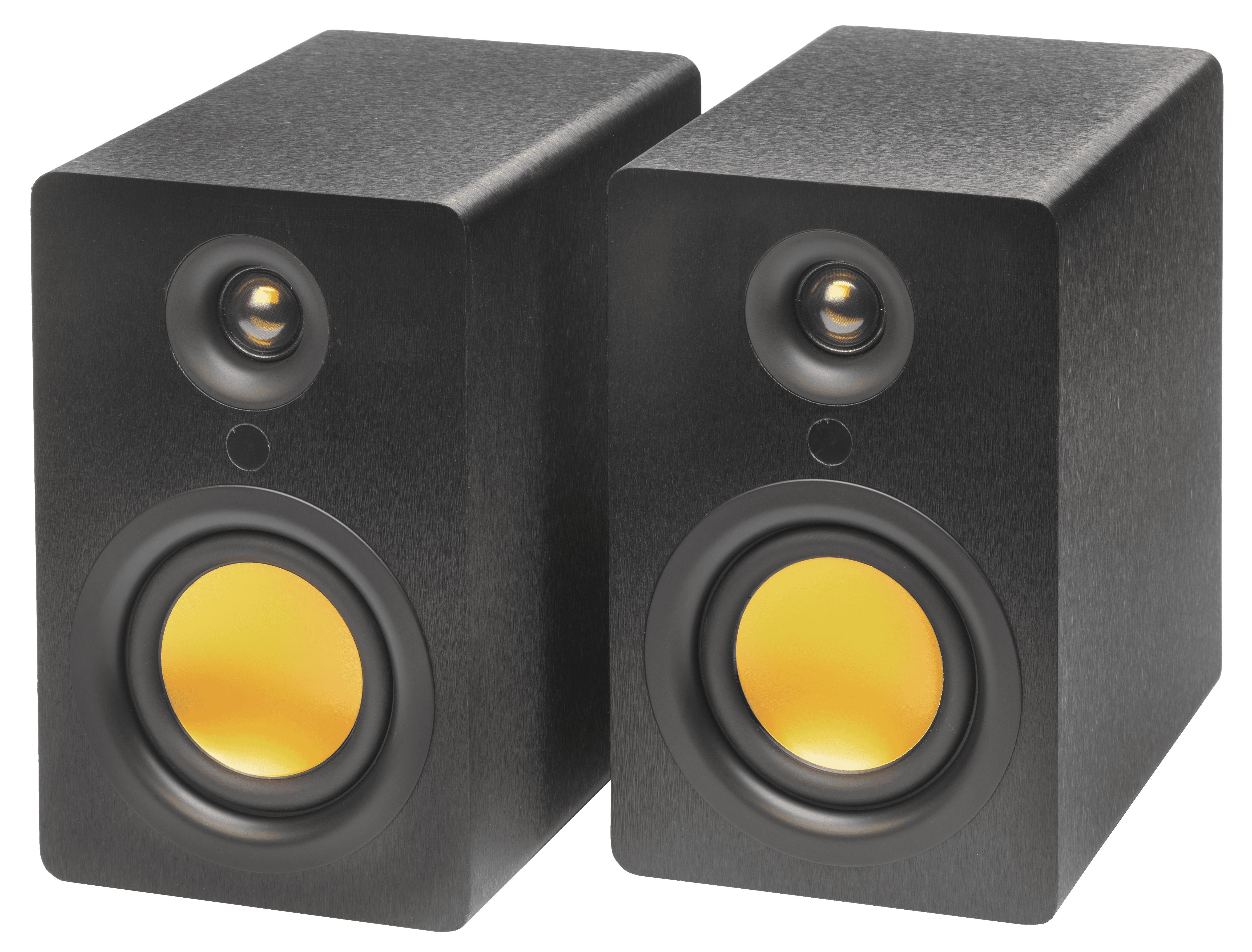
A speaker driver has a cone held in place by two springy parts: the surround, the flexible ring around the edge of the cone, and the spider, a pleated ring behind it. When a speaker is brand new, these parts are at their stiffest. As the driver moves back and forth over its first hours of use, they loosen slightly and settle.
Does break-in actually change the sound?
A little, in some speakers. The surround and spider are the parts most likely to change, which means any difference shows up mainly in the bass from the larger drivers. A slightly freer cone can move a touch more easily, and some listeners describe the low end as a little fuller or more relaxed after the first few weeks.
What break-in does not do is turn one speaker into another. If a new pair sounds harsh, thin or boomy on day one, running it in is unlikely to fix that. The causes are far more likely to be placement, the room or the source.
It is also worth being honest about the listener. Your ears and brain adjust to any new sound. A pair that seems unfamiliar on the first evening can sound natural a week later simply because you have got used to it. That is a real effect, but it is happening in you, not in the speakers.
How long does it take to break in speakers?
There is no fixed figure, and any number you read is a rough guide. Most of whatever settling happens tends to happen early, in the first hours of ordinary playing. After that, changes are slow and small.
The practical answer is to stop counting. Use the speakers normally for a few weeks before you make any final judgement about how they sound, and the question takes care of itself.
How should you break in new speakers?
You do not need a special routine. A few sensible habits are all it takes.
Play music you enjoy at normal volume. Ordinary listening moves the drivers enough to let them settle.
Skip the loud marathons. Running new speakers hard for hours does not speed anything up, and pushing any speaker beyond its comfortable level risks damage.
Ignore special break-in tracks. Test tones and noise recordings are not needed, and some are unpleasant to live with.
Vary what you play. A mix of music with real bass, voices and detail gives the whole speaker something to do.
What matters more than break-in?
Placement, by a long way. Moving a speaker a little further from the wall, angling it towards your seat or raising the tweeter to ear height can change the sound more than any amount of running in. Our guide to where speakers should be placed is the best place to start, and our article on how far bookshelf speakers should be from the wall covers bass in detail.
The room matters too. Hard floors and bare walls make any speaker sound brighter and less focused, while a rug and some soft furnishings calm things down. If you want to understand what to listen for in a new pair, our guide to what makes speakers hi-fi explains the basics.
When should you worry about a new speaker?
Break-in never explains a fault. If you hear buzzing, rattling, crackling or distortion at modest volume, or one speaker sounds clearly different from the other, check the connections and the source first. If the problem stays, contact the retailer or the maker rather than waiting for it to play in.
What about uStream speakers?
Treat a new uStream pair like any other: set it up, place it well and enjoy it. The two speakers link automatically when you switch them on, with no app and no Wi-Fi, and there is no wire between the speakers, so you can try a few positions until it sounds right. Every product comes with a 2-year no-quibble warranty. For keeping a pair in good condition over the years, see our guide to caring for your speakers and turntable.
Frequently asked questions
Do new speakers sound better after a while?
Sometimes slightly, as the driver suspension loosens. Much of the change people notice is their own ears adjusting to a new sound.
How long do speakers take to break in?
There is no fixed time. Most settling happens early, during ordinary listening. Use them normally for a few weeks before you judge them.
Should I play speakers loud to break them in?
No. Normal listening levels are enough, and playing new speakers hard for long periods can risk damage.
Is speaker break-in a myth?
Not entirely. The suspension parts do loosen a little, but the effect is small and cannot fix a speaker that sounds wrong because of placement or the room.
Follow Mitchell Acoustics on Facebook, Instagram, YouTube, X, Threads, Pinterest, LinkedIn and TikTok for new uStream guides, setup films and listening tips.

