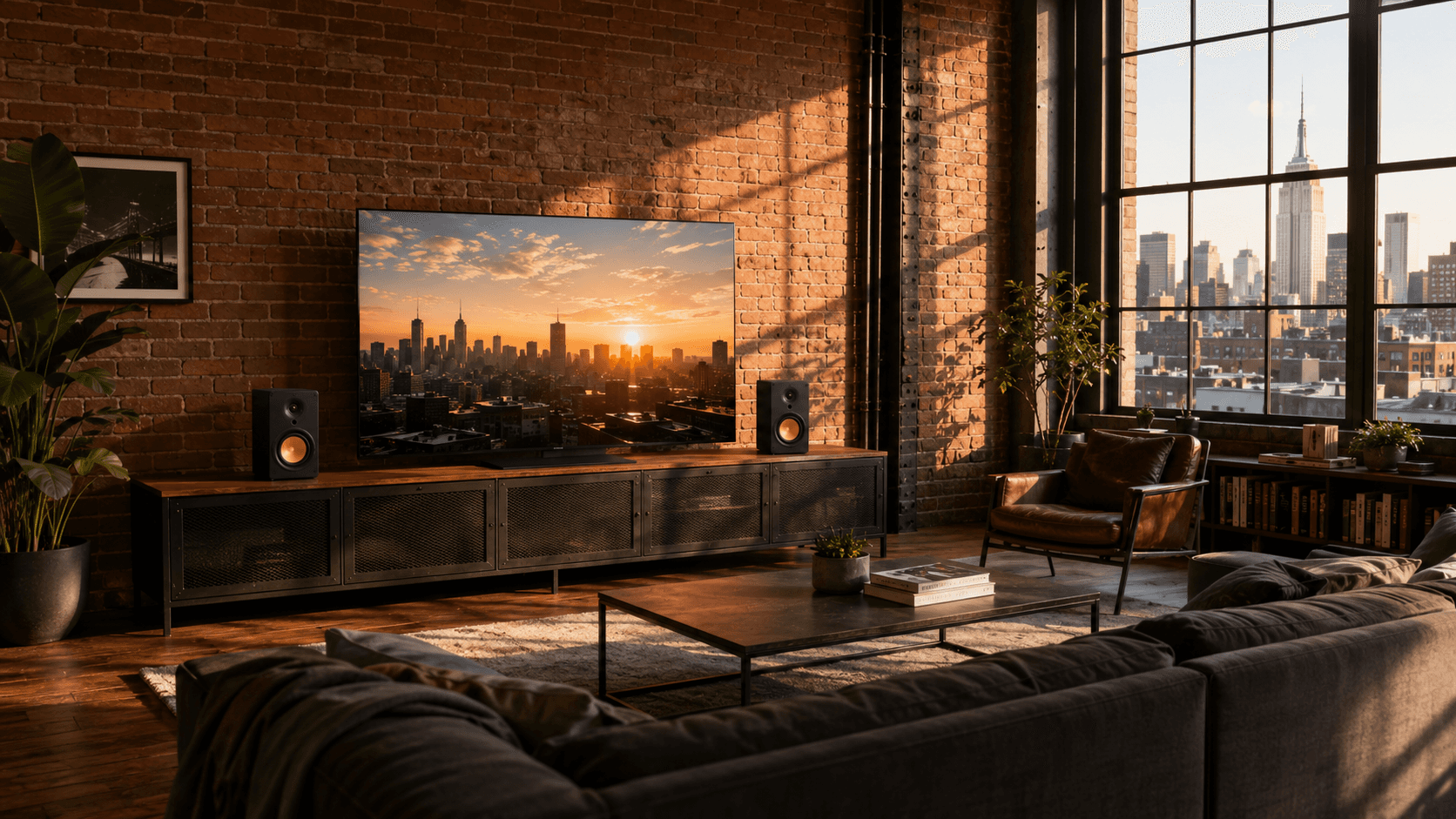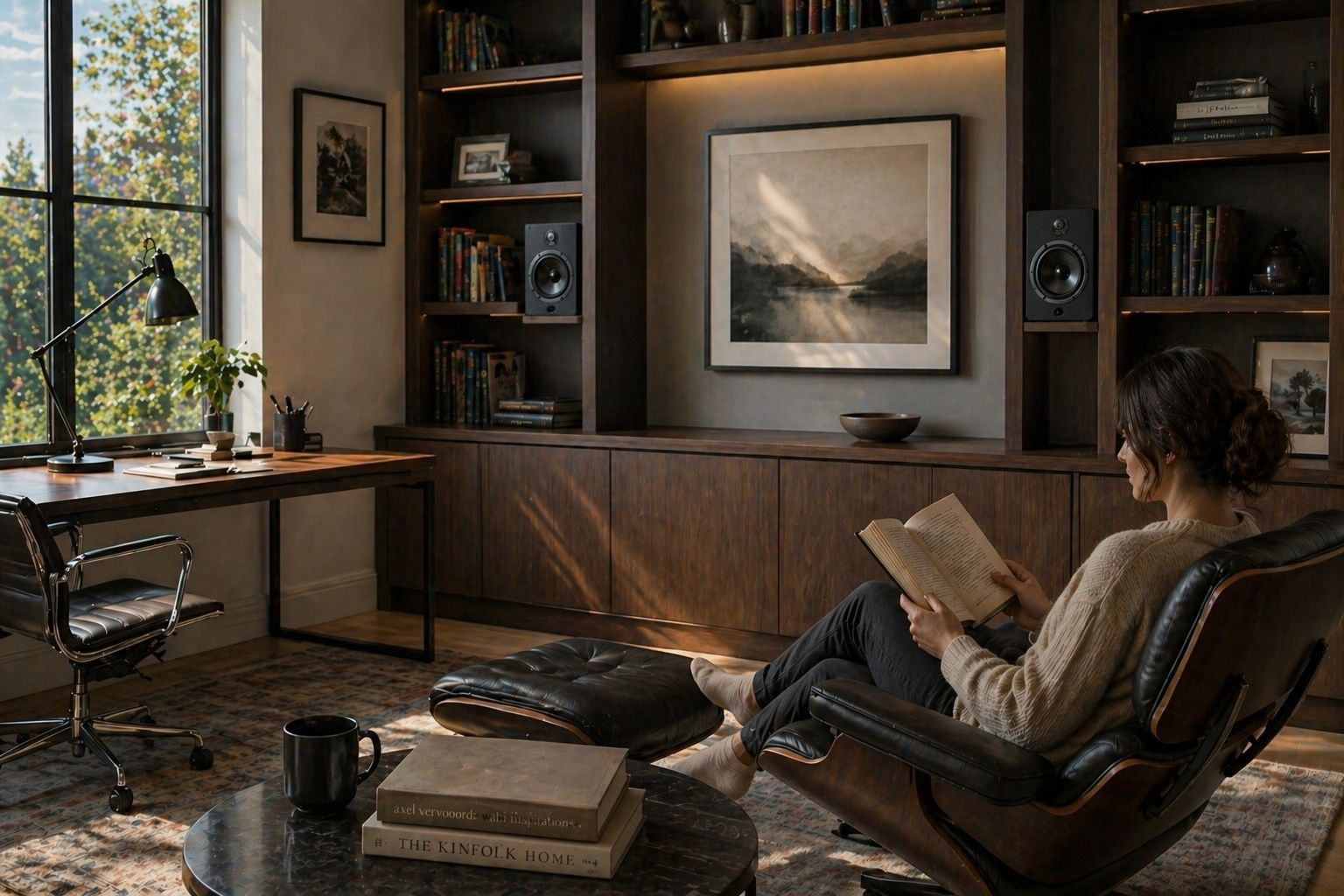
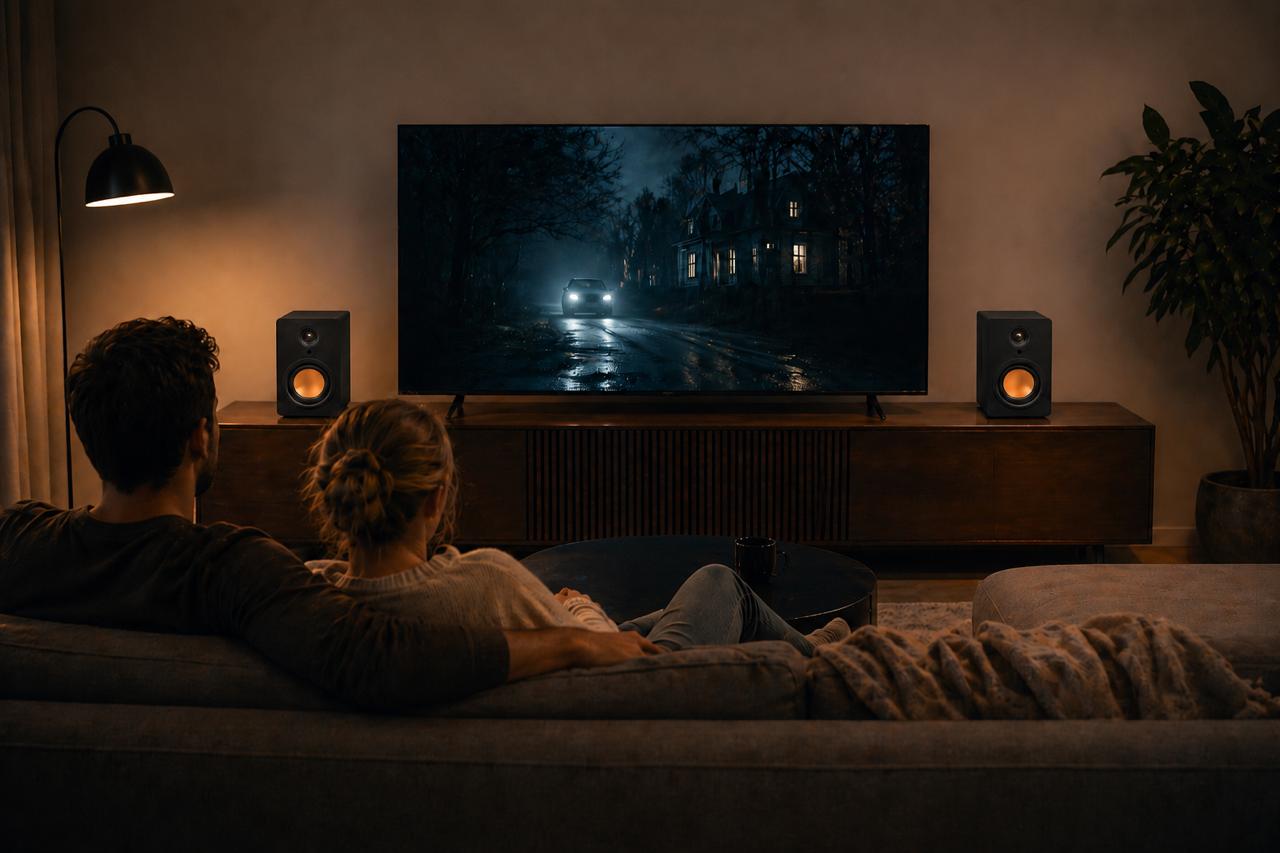
The best place for a turntable in a living room is a solid, level surface that is not shared with the speakers, away from foot traffic, direct sun and radiators, and within easy reach of your seat. Put the speakers on their own stands or shelves either side, and the whole system will sound better and stay out of trouble. The rest is small details, and most of them cost nothing.
Where should a turntable go in a living room?
A turntable is unusual among hi-fi components because the stylus is physically reading a groove. Anything that shakes the deck, whether footsteps, a speaker or a door slamming, can reach the record. So the best spot is the one that moves least.
Good places:
A solid sideboard or low cabinet. Heavy furniture standing on a solid floor is the easiest option.
A wall-mounted shelf rated for the weight. Fixed to a masonry wall, a sturdy shelf takes the deck off the floor entirely.
A dedicated stand or credenza. Low enough to reach, high enough that the records live beside it.
Places to avoid:
A shelf on the same unit as the speakers. Sound pressure from the speakers shakes the surface, and the stylus picks it up as a low rumble or a boom that builds with the volume.
A TV stand with a flexible top. Light, hollow furniture flexes and resonates.
A windowsill or anywhere in direct sun. Heat can warp records and fade the finish.
Next to a radiator or heater. Records and belts do not enjoy being warm for long.
The middle of a walkway. If people walk past often, someone will knock it.
If your home has suspended wooden floorboards, test the spot before you commit. Play a record and walk across the room. If the needle jumps or the sound wobbles, move the deck to a wall that sits on a more solid part of the floor, or use a wall shelf.
How do you get the turntable level?
Level matters more than people expect. A deck that leans can make the tonearm drift towards one side of the record, which affects how the stylus tracks the groove.
Put a small spirit level, or a level app on your phone, on the platter or the plinth. Most turntables have adjustable feet. Turn them until the bubble sits in the middle in both directions. Then check the arm: with the stylus lifted and the arm free, it should not slide on its own towards the centre or the edge.
Follow the manufacturer’s instructions for the counterweight and anti-skate, because those two settings differ between decks. They set how hard the stylus presses into the groove and how the arm is balanced as the record plays.
How far should the speakers be from the turntable?
Further than you might think. Giving the turntable and the speakers separate surfaces is the single biggest improvement for most living rooms, and it is free.
The ideal arrangement has the speakers on stands or shelves to either side of the TV or the main seating area, with the turntable at a different point in the room, typically on a sideboard to one side. If the deck has to sit between the speakers, keep it on a stand that is separate from the speakers’ own supports and leave a gap.
For where the speakers themselves should sit, our guide to where speakers should be placed covers real rooms with awkward sofas, and how far from the wall bookshelf speakers should be deals with the gap behind them. Start with the speakers and your seat, then find the deck a quiet spot nearby.
What do you need for a living room turntable setup?
A turntable on its own cannot play music out loud. You need four things in the chain, and it helps to know where each one lives.
The turntable, with its cartridge and stylus.
A phono stage, which boosts the tiny signal from the cartridge and applies the standard RIAA equalisation. It can be built into the deck, into the speakers or amplifier, or sit in a separate box. You need exactly one.
Amplification, either in an amplifier or inside powered speakers.
Speakers, ideally a stereo pair.
Our article on what speakers you need for a record player goes through the phono stage question in more detail. The short version for a living room is that powered speakers and a turntable with a built-in preamp give you the fewest boxes, which suits a room where everything has to look tidy.
How do you keep the cables tidy?
In a living room, cables are usually the real design problem, not the sound. A few habits help:
Run the turntable’s lead along the back of the furniture rather than across the floor.
Keep signal cables and mains cables apart where you can. Running them side by side is a common cause of hum.
Use the shortest cable that reaches without being stretched.
If your turntable has a separate earth wire, connect it to the earth terminal on the phono stage or amplifier. A missing earth is a frequent cause of buzzing.
You can also remove most of the cables. A Bluetooth turntable streams to a Bluetooth speaker without a signal cable at all. The uStream TT1 does this: it streams over Bluetooth to any Bluetooth speaker with no receiver or phono cable, and it also has a switchable built-in phono preamp and RCA outputs if you would rather run it wired. The uStream Groove pairs the uStream TT1 with two uStream Cube speakers, so there is no cable between the deck and the speakers to hide.
How do you make vinyl work in a room you also live in?
A dedicated listening room is easier to get right than a living room. In a shared space, a few practical decisions make the difference between a setup you use every day and one you stop bothering with.
Keep the records within reach. The less effort it takes to put a record on, the more you will play them. A shelf or crate beside the deck is ideal. Store records upright, never stacked flat, and out of direct sun and heat.
Think about the dust. A turntable with a lid should have it closed when it is not playing. A soft carbon-fibre brush before each side, and a gentle stylus brush now and then, keep surface noise down. The stylus wears with use, so check your manufacturer’s guidance on when to replace it.
Plan for the TV. Most living rooms have one. If your speakers are doing double duty, our guide to the best kind of speakers for a TV explains how a stereo pair handles both films and records, and a pair of powered speakers with a TV input means you do not need a separate soundbar.
Mind the volume and the neighbours. Bass travels through floors and shared walls more than treble does. If you share a wall, keep the speakers off the floor on stands and away from the party wall.
Make it comfortable. Vinyl is an activity. Put a chair where you can reach the deck and see the label turn. That small decision is why many people play more records once they have a proper seat for it.
A simple living room checklist
Pick a solid, level surface that is not shared with the speakers.
Keep the deck away from sunlight, radiators and walkways.
Level the turntable and set the counterweight and anti-skate as the manual says.
Check that exactly one phono stage is in the chain.
Put the speakers on their own stands, away from the deck and clear of the wall behind.
Run cables behind furniture, or cut them out with a Bluetooth deck.
Store records upright and give the deck a lid or dust cover.
Play something you know well and walk around the room to check for skips and rumble.
For the bigger picture of arranging a room for music, see listening room design.
Frequently asked questions
How do you set up a turntable properly?
Put it on a solid, level surface away from the speakers, level it with a spirit level, set the counterweight and anti-skate as the manual describes, and connect it to one phono stage. Then connect that to powered speakers or an amplifier with the right lead.
What do you need for a turntable setup?
A turntable, a phono stage (built in or separate), amplification and speakers. Powered speakers with a turntable that has a built-in preamp are the simplest combination, because they need no extra boxes.
Can you put a turntable on a TV stand?
You can, if the stand is solid and heavy, and if the speakers do not share it. Light or hollow stands flex and pass vibration to the stylus. If the TV stand is the only surface available, keep the speakers on separate stands beside it.
Why does my turntable skip when people walk past?
Usually the floor or furniture is flexing. Suspended wooden floorboards are the usual cause. Move the deck to a solid piece of furniture on a more rigid part of the floor, or fix a sturdy shelf to a masonry wall.