
A good Bluetooth turntable, played through good speakers, sounds close enough to a wired connection that most people in most rooms will not hear a difference they care about. It is not identical: Bluetooth turns the analogue signal into digital and compresses it, so a cable is still the purer path. But the cartridge, the speakers and where you put them make a far bigger difference to how your records sound than the link between deck and speaker.
How does a Bluetooth turntable work?
Every turntable starts the same way. The stylus traces the groove, and the cartridge turns those tiny movements into a very small electrical signal. That signal has to go through a phono stage, which boosts it and applies the standard RIAA equalisation so the bass and treble come back into balance.
A wired turntable sends that analogue signal down a cable to an amplifier or a pair of powered speakers. A Bluetooth turntable adds three steps after the phono stage:
A converter turns the analogue signal into digital.
A Bluetooth chip encodes it with a codec, which compresses the data so it fits through the wireless link.
The speaker receives it, decodes it, turns it back into analogue and amplifies it.
So the record is still read in exactly the same way. The difference is what happens between the deck and the speaker.
What does Bluetooth actually change about the sound?
Two things: the digital conversion and the compression.
The conversion is the smaller issue. Analogue to digital conversion is mature technology, and a competent converter is very good at capturing what the phono stage gives it.
Compression is where the real trade-off sits. Bluetooth has limited bandwidth, so the codec throws away some information it judges you are unlikely to hear. Every Bluetooth device that streams music supports a basic codec, called SBC. Some devices also support others that aim for higher quality. Both ends of the link have to support the same codec, otherwise they fall back to the basic one.
What can you hear? At normal listening levels, with a decent codec, most people struggle to pick out the difference in a blind comparison. Where Bluetooth tends to show its limits is on very detailed, quiet recordings through revealing speakers, where a careful listener may notice the top end sounds a little less open or the space around instruments a little less defined. Whether that matters to you depends on your speakers, your room and your ears.
One thing Bluetooth does not ruin is timing. You may have read about Bluetooth delay with video. That matters when sound has to match a picture, but with a record there is no picture, so a fraction of a second of delay makes no difference at all.
Does a Bluetooth turntable defeat the purpose of vinyl?
This is a fair question, and the honest answer is: only if a purely analogue signal path is the reason you play records.
For a lot of people it isn’t. They play vinyl for the ritual of choosing a record and dropping the needle, for the artwork and sleeve notes, for owning the music, for listening to an album as a whole side at a time, and for the sound of a particular pressing. All of that survives Bluetooth intact. The mastering and the character of the cartridge are still there in what reaches the speaker.
If you are building a system around the idea of analogue from groove to speaker, then yes, run a cable. Many Bluetooth turntables let you do both, which is the sensible way to buy one.
When is a wired connection worth it?
A cable is the better choice when:
Your speakers or amplifier are good enough to show the difference. Revealing speakers in a quiet room are where compression is most likely to be audible.
The deck and speakers sit close together anyway. If a short cable will do the job neatly, there is little reason not to use it.
You already own an amplifier with a phono input. Switch the turntable’s own phono stage off and let the amplifier do the job.
Your home has a lot of wireless traffic. Bluetooth shares the 2.4GHz band with Wi-Fi and other devices, and a crowded space can cause occasional dropouts.
Bluetooth is the better choice when:
The speakers sound best somewhere the cables won’t comfortably reach. Good placement beats a perfect cable every time.
You want no wires across the room. In a living room that is often the deciding factor.
You want to keep the turntable away from the speakers. Vibration from speakers sharing a surface with the deck can reach the stylus. A wireless link makes it easy to put them on different furniture.
Does a Bluetooth turntable need an amplifier?
Not when it streams to Bluetooth speakers. Every Bluetooth speaker that plays out loud has its own amplifier built in, and a Bluetooth turntable has its phono stage built in, so the chain is complete with nothing in between.
If you use the turntable’s wired outputs, it works like any other deck. Connect it to powered speakers, which have their amplifiers inside, or to an amplifier driving passive speakers. Check that exactly one phono stage is switched on: two in a row sounds loud and distorted, none sounds thin and very quiet. Our guide to what speakers you need for a record player covers the phono stage question in more detail.
Can a Bluetooth turntable play through two speakers in stereo?
Yes, if the speakers are a stereo pair that link to each other. Your records are recorded in stereo, so it is worth getting this right.
Some Bluetooth speaker pairs use True Wireless Stereo: one speaker takes the left channel, the other the right, and they link wirelessly to each other. Our article on True Wireless Stereo explains how that works and when it gives you genuine left and right. A single Bluetooth speaker, however good, folds the stereo picture into one box.
How do you get the best sound from a Bluetooth turntable?
Most of the improvements are free, and most apply to any turntable.
Look after the source. A clean record and a clean, healthy stylus matter more than the link. A dusty stylus or a worn one is audible on any system.
Set the deck up properly. Level the turntable and set the counterweight and anti-skate as the manual says. Our guide to setting up a turntable in the living room walks through it.
Keep the link short and clear. Bluetooth range drops through walls and around large obstacles. Keep the deck and speakers in the same room with a reasonably clear line between them, and away from a Wi-Fi router if you can.
Stop other devices grabbing the speakers. If your phone was paired with the speakers last, it may reconnect first. Disconnect it before you put a record on.
Spend on the speakers. A good stereo pair placed well will lift a Bluetooth turntable far more than any change to the wireless link.
A note on version numbers: the Bluetooth version printed on the box mainly affects range, connection stability and power use. The codec has more to do with sound quality.
What to look for when you buy one
A Bluetooth turntable is still a turntable first. Look for a solid build, a proper moving magnet cartridge, a counterweight and anti-skate adjustment, and a phono stage you can switch off. Wired outputs alongside Bluetooth give you room to grow.
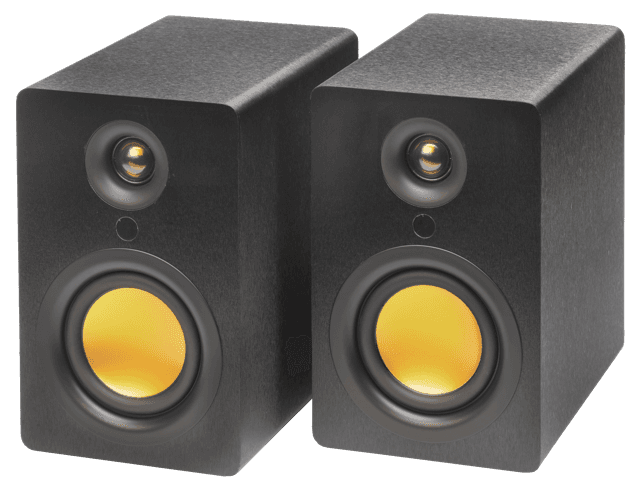
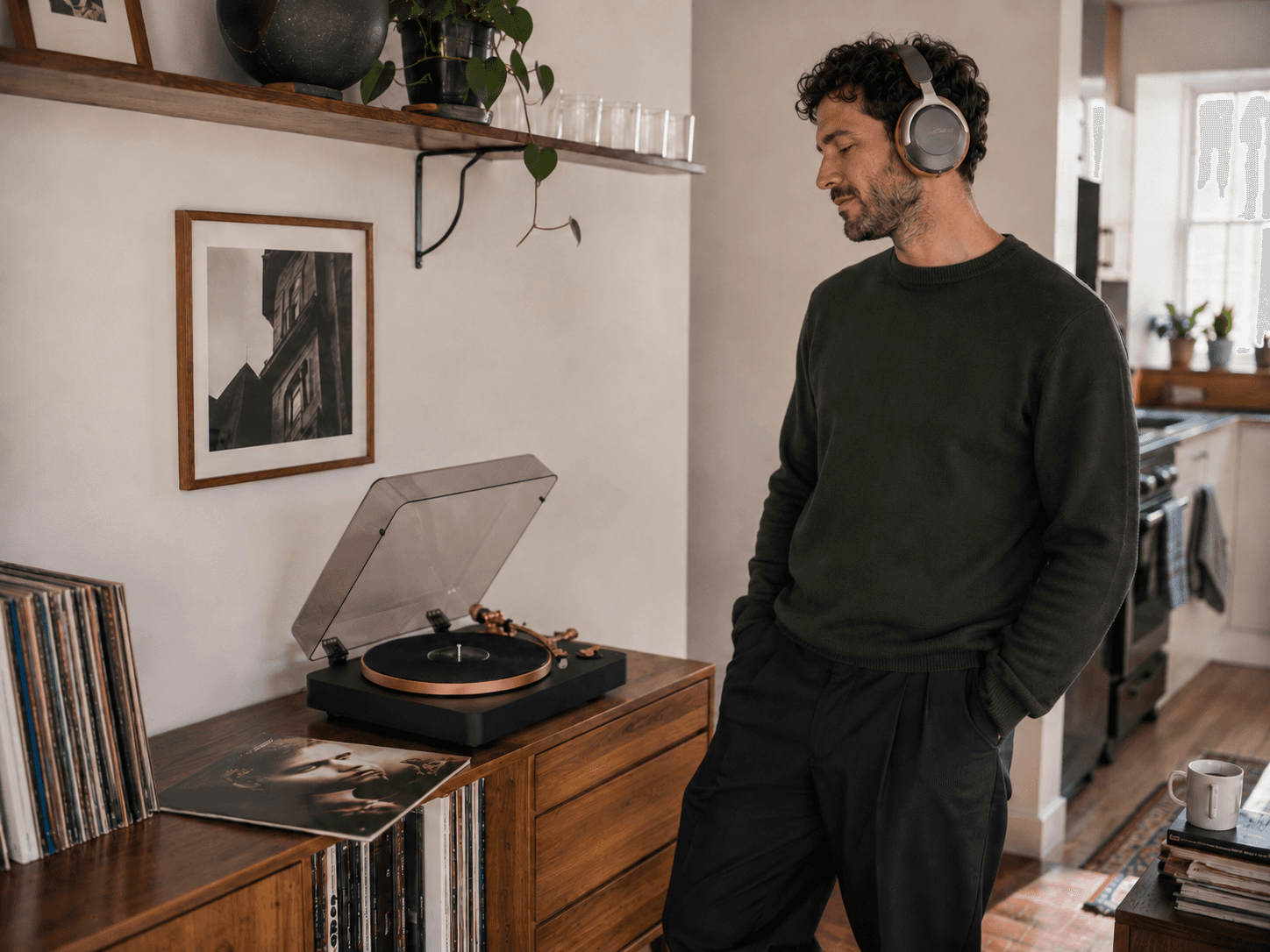
That is the thinking behind our own uStream TT1. It is a belt-drive deck with an Audio Technica AT-3600 moving magnet cartridge, and it streams to any Bluetooth speaker with no receiver or phono cable. It also has a built-in phono preamp you can switch off from the rear panel and RCA outputs, so it works as a Bluetooth source, a wired source or both. It is a manual deck: you lift the tonearm onto the record and back to its rest yourself, and auto-stop halts the platter at the end of a side. If you want the speakers chosen for you, the uStream Groove pairs the uStream TT1 with two uStream Cube speakers that link to each other by True Wireless Stereo and pair to the turntable automatically.
Frequently asked questions
Are Bluetooth turntables worth it?
For most homes, yes. You give up a fully analogue path, but you gain freedom to put the speakers where they sound best and lose the cables across the room. Choose one with wired outputs as well, and you keep the option of a cable later.
Do Bluetooth turntables sound good?
A well-made one does. The sound depends far more on the cartridge, the stylus, the speakers and the room than on Bluetooth. Cheap all-in-one players with tiny built-in speakers give Bluetooth turntables a poor reputation that the wireless link doesn’t deserve.
How do you connect a Bluetooth turntable to a speaker?
Put the speaker into pairing mode, then press the pairing button on the turntable and wait for them to connect. If your speakers are a True Wireless Stereo pair, link the two speakers to each other first, following their manual, then pair the turntable. Disconnect your phone from the speakers beforehand so it doesn’t get in the way.
How far can a Bluetooth turntable be from the speakers?
Within the same room is the safe rule. Range depends on the devices, walls and other wireless traffic, so keep a reasonably clear path between the deck and the speakers and test the spot before you settle on it.