A two-way speaker splits the sound between two drivers: a woofer that handles the low and middle frequencies, and a tweeter that handles the highs. A small circuit called a crossover sends each driver only the part of the sound it is good at. That is why most good bookshelf speakers are built this way, and why it is worth knowing when you compare speakers for a room.
How does a two-way speaker work?
Music covers a huge range, from deep bass notes to the sparkle of cymbals. No single driver is ideal across all of it. A large cone moves enough air to make bass, but it is too heavy to vibrate quickly enough for fine high detail. A small, light dome can vibrate very fast, but it cannot move enough air to make real bass.
A two-way speaker solves this by sharing the job:
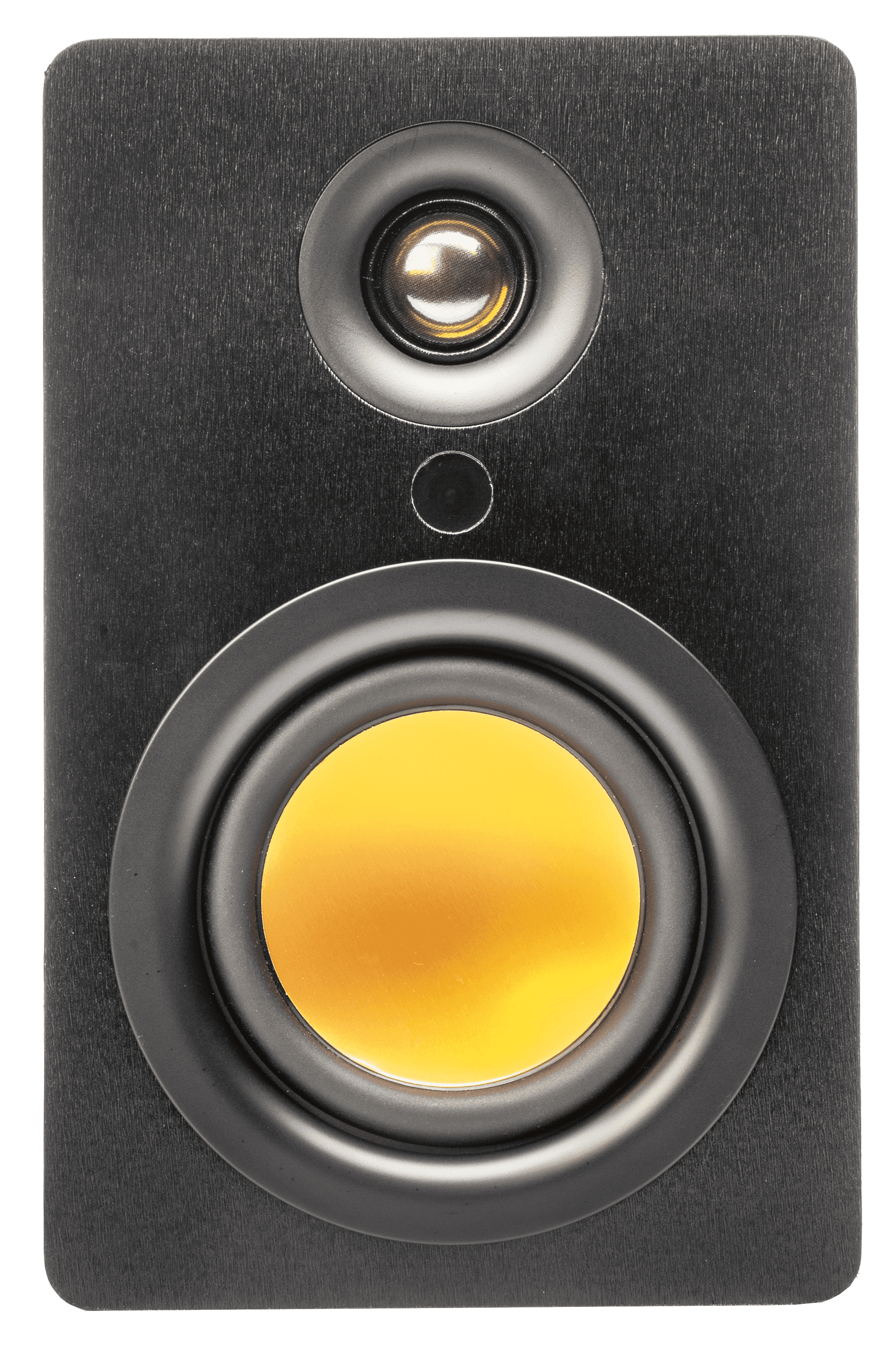
The woofer is the larger driver. It plays bass and most of the midrange, which is where voices and the body of instruments live.
The tweeter is the small dome or cone. It plays the highest frequencies, such as the crisp edge of a snare or the breath in a vocal.
The crossover sits between the amplifier and the drivers. It filters the signal so the woofer does not get the highest notes and the tweeter does not get the lowest ones. The tweeter in particular would be damaged and sound harsh if it were fed deep bass.
Done well, you do not hear the handover between the drivers at all.
What is the difference between a two-way and a full-range speaker?
A full-range speaker covers everything with one driver. That keeps the design simple and compact, and all the sound comes from a single point. The trade-off is compromise: one driver usually gives up some deep bass, some top-end detail, or both.
A two-way design lets each driver be tuned for its own range, so you generally get a wider, cleaner spread of sound from a cabinet of the same size. Single-driver designs still have their place where size matters most. A uStream Cube, for example, uses a single 106mm driver in a small cabinet that suits a shelf or TV unit.
What is a co-axial two-way speaker?
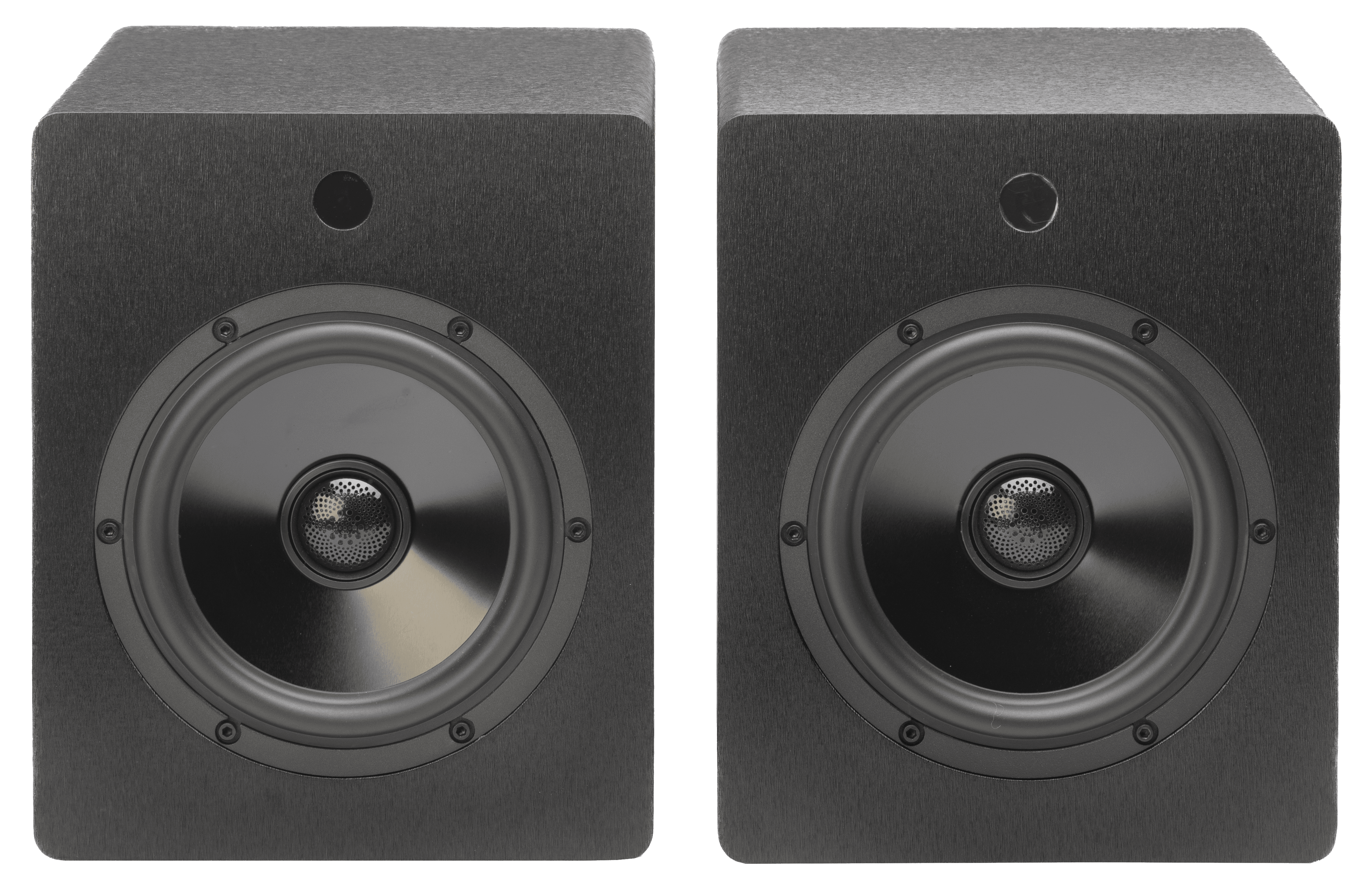
In an ordinary two-way speaker the tweeter sits above the woofer, so the two sounds start from slightly different points. A co-axial design puts the tweeter in the middle of the woofer, so both drivers share the same centre line.
The aim is for the sound to arrive from a single point, which can give a more even sound across a wider listening area. The uStream Two is built this way: a 165mm woofer and a 32mm tweeter share one axis and one magnet assembly, and each driver has its own amplifier.
Is a three-way speaker better than a two-way?
Not automatically. A three-way speaker adds a mid-range driver, so the woofer only handles bass, the mid-range handles voices and instruments, and the tweeter handles the highs. This can bring more separation and more power in a large room. The uStream Three is a three-way design with a tweeter, a mid-range driver and a woofer in each cabinet.
Extra drivers also mean a more complex crossover and a bigger cabinet. A well designed two-way speaker often beats a poorly designed three-way, and in a small or medium room it is usually all you need.
What does it mean when you are choosing speakers for a room?
A few practical points follow from all this:
Driver size matters less than the match to the room. Our guide to what size speakers you need for a room explains how to size a pair.
Check how the drivers are powered. In an active design each driver can have its own amplifier. The uStream One, for instance, pairs a 106mm magnesium alloy woofer with a 38mm silk composite tweeter and gives each its own amplifier. Our piece on powered vs passive speakers covers the difference.
Look at RMS power. RMS tells you what a speaker can sustain.
Listen at ear height. A tweeter aimed well above or below your ears loses the top end it is there to deliver.
For a wider look at what makes speakers sound good, see what makes speakers hi-fi. The full uStream range shows each model with its drivers.
Frequently asked questions
Does a two-way speaker have bass?
Yes. The woofer handles bass as well as the midrange. How low the bass goes depends mainly on the size of the woofer, the cabinet and how it is tuned, not on the fact that it is a two-way design. A small two-way speaker will not match a large floor-standing speaker for the deepest notes.
What does 2-way mean on a car speaker?
The same thing: a woofer for the lows and mids and a tweeter for the highs, with a crossover between them. In a car the tweeter is often a separate small unit mounted higher up, or one set in the middle of the woofer.
Is a two-way speaker good enough for TV and music?
For most rooms, yes. A pair of two-way speakers gives clear dialogue from the midrange and clean detail from the tweeter. For TV set-ups, see our guide to speakers for TV.
Follow Mitchell Acoustics on Facebook, Instagram, YouTube, X, Threads, Pinterest, LinkedIn and TikTok for new uStream guides, setup films and listening tips.