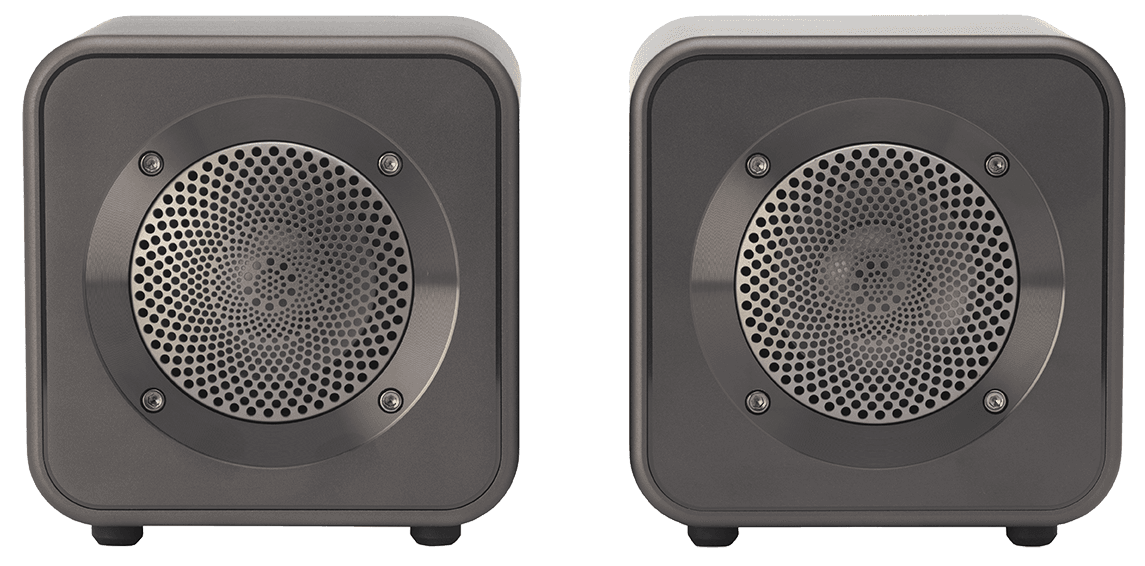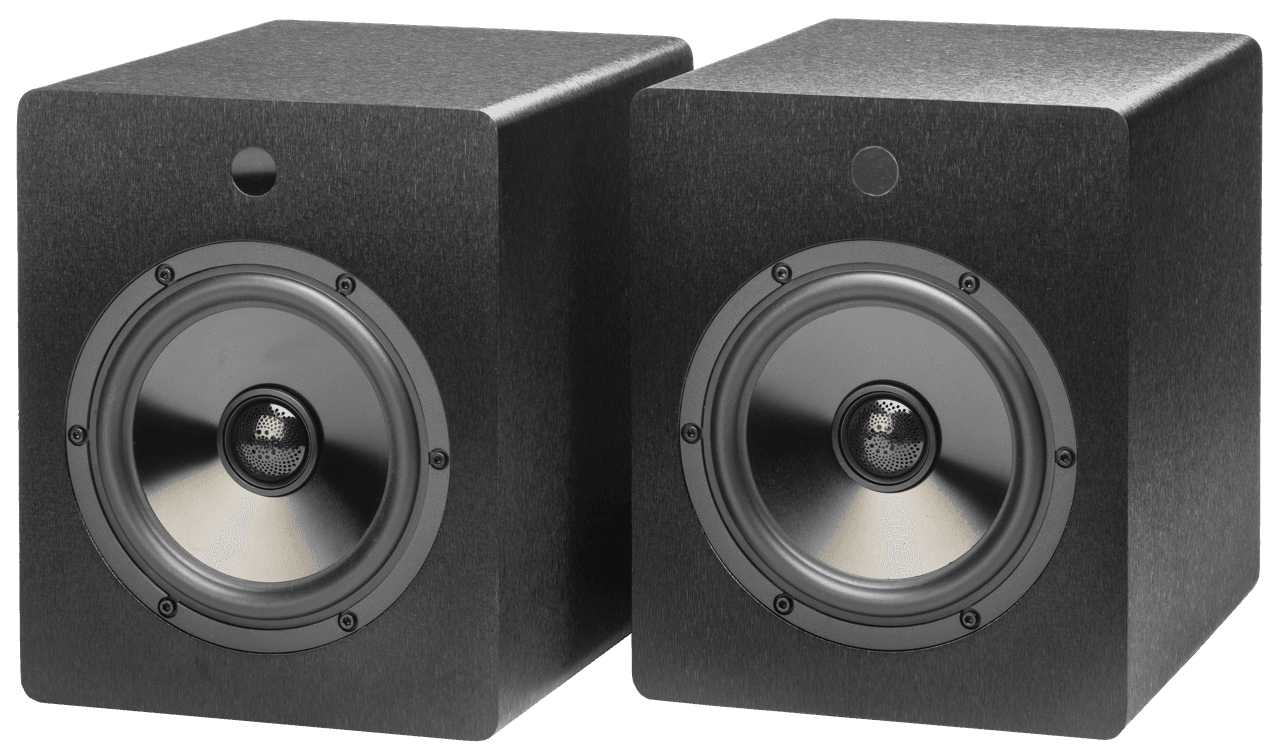

Front-ported speakers can usually sit closer to a wall than rear-ported ones, often somewhere between 10 and 30cm from the wall behind them, because the port sends its bass forwards into the room instead of towards the wall. Treat that as a starting point rather than a rule. Your room and your ears have the final say, and a few minutes of moving the speakers in small steps will settle it.
What is a speaker port, and why does it matter?
A port is a tube or slot in the cabinet that lets air move in and out as the driver works. Tuned properly, it adds weight to the low end that a small cabinet could not manage on its own. A speaker without a port is called sealed, and it behaves differently near walls.
The key point for placement is where the port outputs its sound. If the opening faces backwards, that bass heads straight for the wall behind the speaker, bounces back and piles on top of the bass coming from the driver. The result is often boomy, slow and one-note. If the opening faces forwards, most of that extra bass starts out heading towards you, so the wall has less chance to exaggerate it.
How do you tell if your speakers are front-ported or rear-ported?
This takes about ten seconds.
Look at the front. A round hole or a long slot below or beside the main drivers means a front port.
Look at the back. A round hole near the top or middle of the rear panel means a rear port. Many speakers also have the port on the base, firing downwards.
Check the manual. The specification usually says “front ported”, “rear ported” or “sealed”, and often gives a minimum distance from the wall. If the maker states a number, follow it.
If you can find no opening anywhere, you probably have a sealed speaker. Sealed designs are generally the most forgiving near a wall, although they are not immune to it.
How close can front-ported speakers go to the wall?
A good working range is 10 to 30cm from the wall behind. Closer than 10cm and even a front-ported speaker will start to sound heavier, because the low frequencies bounce back off the wall and build up.
Rear-ported speakers usually want considerably more room, and our guide to how far bookshelf speakers should be from the wall covers the general rule of thumb. The short version is that front-ported speakers buy you flexibility, not a licence to push them hard against the plaster.
Side walls matter too. Keep each speaker at least as far from its nearest side wall as it is from the back wall, and try to make both sides match so the stereo picture stays balanced.
Can front-ported speakers go on a shelf or in a corner?
A shelf is where front-ported speakers earn their keep. Pull the speaker forward so the front is level with the shelf edge and the port is not firing into a cavity, then fill spare space around it with books.
A corner is a harder call. Two walls close together reinforce the bass much more than one, and even a front port will not cancel that out. If a corner is your only option, expect heavier bass and move the speakers out a few centimetres at a time.
When should you move front-ported speakers out anyway?
Move them away from the wall if you notice any of these:
Bass notes that all seem to have the same weight and drone on after the music has moved.
Male voices that sound chesty or boxed in.
A low hum on certain notes, which can be the wall or nearby furniture resonating.
Add 5cm at a time and listen to the same track each time, ideally something acoustic. Stop when the bass sounds even and the voice sits in the middle. If the sound turns thin, come back in a few centimetres.
What if you cannot move them?
If the furniture decides, raise the speakers so the tweeters sit around ear height and add soft furnishings such as a rug or curtains to calm the room. Our guide to where speakers should be placed shows how height, spacing and angle work together.
Does wireless make placement easier?
It removes one of the biggest obstacles. With a traditional pair, a cable runs between the speakers or to an amplifier, and that cable often decides where they end up. Our uStream Cube and uStream One are true wireless stereo pairs, so the left and right speakers pair with each other automatically and there is no wire running between them. That makes it far easier to nudge each one into the right spot. You can compare sizes across the full uStream range.
Frequently asked questions
Can front-ported speakers go against a wall?
They can, and they will cope better than rear-ported ones, but most will still sound heavier and less clear in the bass. A gap of 10 to 30cm usually gives a cleaner result without taking up much room.
Are front-ported speakers better than rear-ported speakers?
Neither is better in every case. Front-ported designs are easier to place in real rooms, on shelves and near walls. Rear-ported speakers can work very well when you have space to give them. It is the placement that decides how good either one sounds.
How far should rear-ported speakers be from the wall?
As a starting point, 20 to 50cm, and more if you can manage it. Rear ports blow their bass at the wall, so the gap matters more with them. Adjust in small steps and listen for the point where the bass tightens up.
Follow Mitchell Acoustics on Facebook, Instagram, YouTube, X, Threads, Pinterest, LinkedIn and TikTok for new uStream guides, setup films and listening tips.