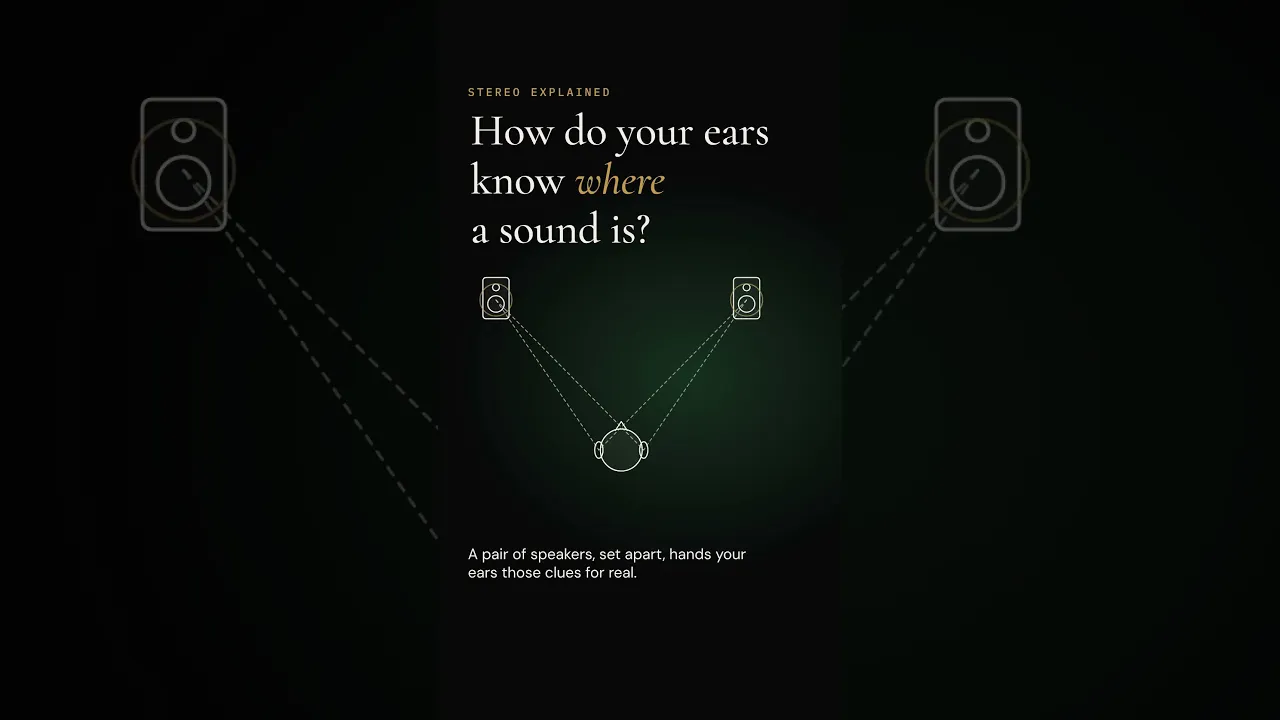

Your brain works out where a sound comes from by comparing what your two ears hear. A sound slightly to your left reaches your left ear a fraction of a second sooner and a little louder than your right. You never notice the gap, but your brain does, and it turns the difference into a direction.
What are the two cues your ears use?
The first is timing. Your ears sit about 18 centimetres apart, so a sound from one side has to travel a little further to reach the far ear. The delay is well under a millisecond, far too short to hear as an echo, yet the brain reads it clearly. The bigger the delay, the further to the side the sound seems to be.
The second is loudness. Your head is a solid object, so it blocks some of the sound on its way to the far ear. That ear hears the sound slightly quieter, and the brain treats the quieter side as the far side. Together, timing and loudness tell you whether a sound is left, right or somewhere between.
Which cue matters more?
It depends on the pitch. Low sounds have long wavelengths that bend around your head easily, so the loudness difference is tiny and timing does most of the work. High sounds are blocked more by your head, so loudness carries more of the information. Your brain blends both without any effort from you.
Why can you tell front from back?
Timing and loudness alone cannot separate a sound in front of you from one behind you, because both reach each ear in the same way. The shape of your outer ear helps here. It changes the tone of a sound slightly depending on the angle it arrives from, and your brain has learned those changes over a lifetime. Small head movements help too, because turning a little changes the timing and loudness and settles the question.
What does this have to do with speakers?
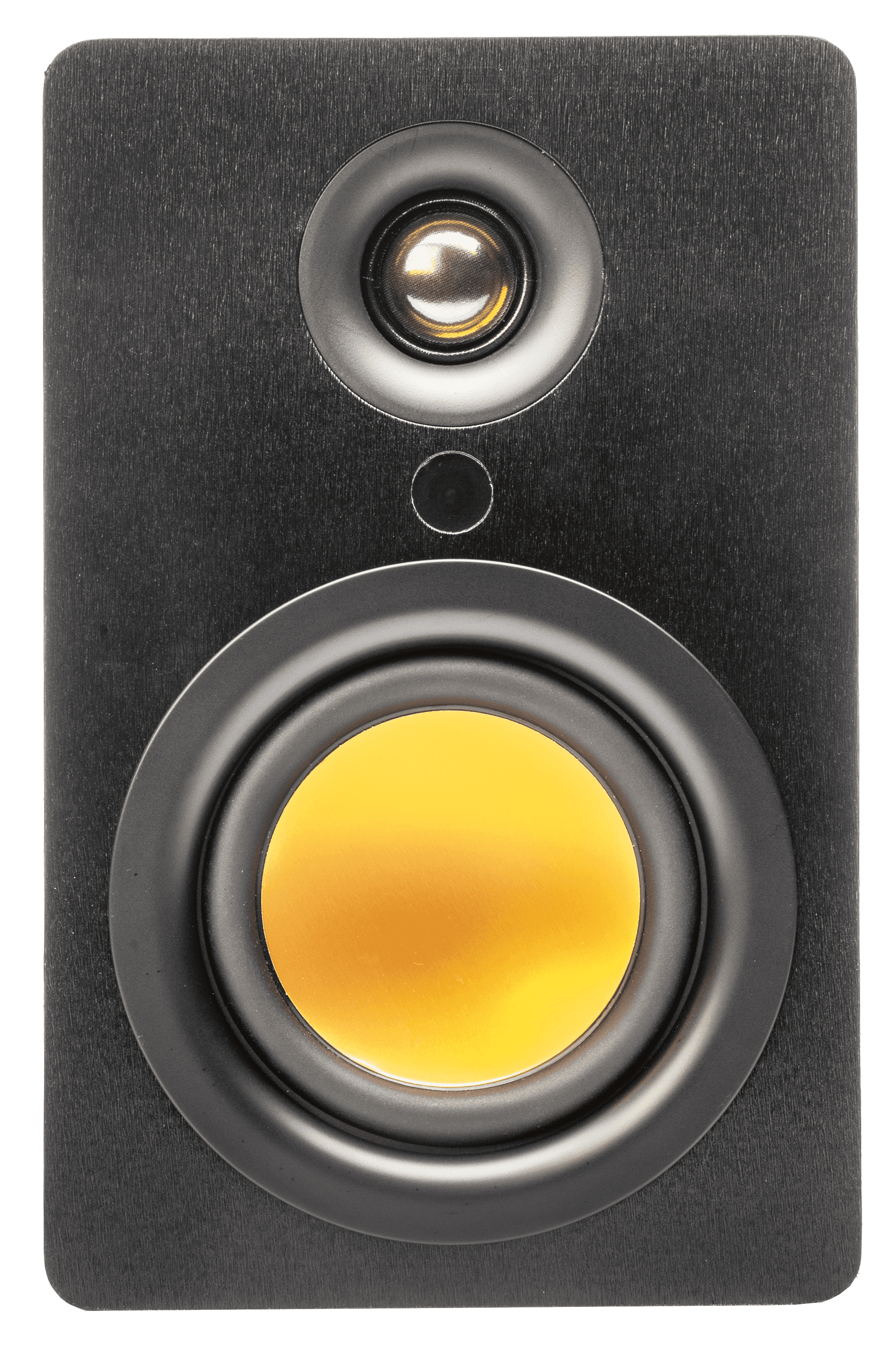
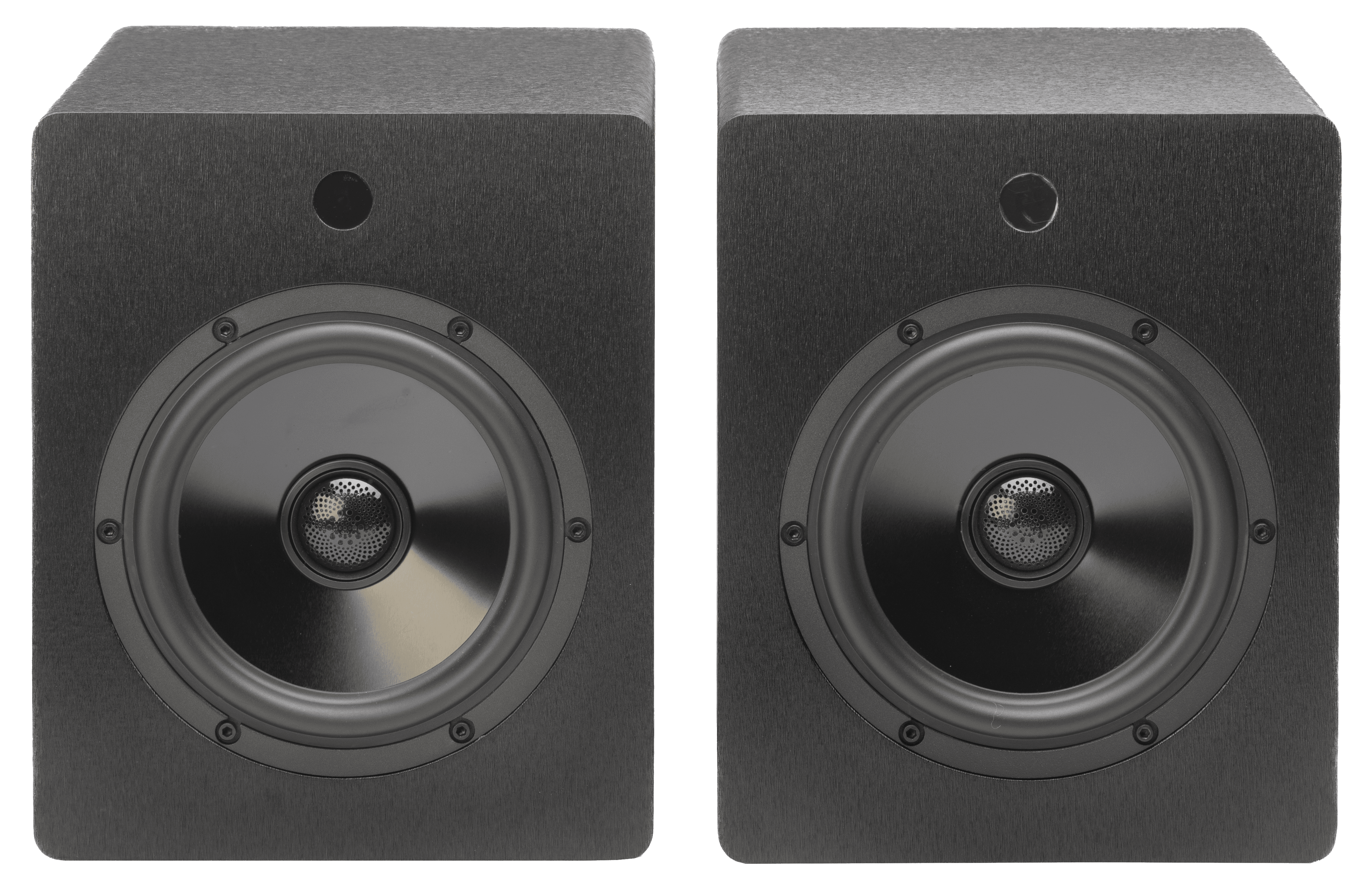
Everything. Recorded music and film sound are mixed so that voices and instruments carry these same small differences between the left and right channels. A guitar mixed slightly left arrives a touch louder in the left speaker, and your brain does the rest. Play it through two speakers and the sound seems to sit between them, in places where there is no speaker at all. That is the stereo image.
If you want the longer version of why this matters, our guide to stereo versus mono speakers walks through what you actually hear, and why stereo still matters covers what a single box leaves out. The channel video How do your ears know where a sound is coming from? shows the same idea in under a minute.
Why can one speaker not do the same job?
A single speaker sends the same sound to both ears from one point. There is no left or right difference to compare, so your brain places everything in that one spot. Voices, instruments and effects all pile into the same small space. That is mono, and it is why a lone box can be loud and pleasant but never wide.
Two speakers give your brain two sources to compare, which is why a pair sounds more open even at the same volume. It also explains why a pair works best when you sit roughly centred between them, so that the timing and loudness from each side reach your ears as the mix intended. Our guide to setting up for a better centre image shows how to get that right.
What goes wrong if you ignore it?
If the speakers are too close together, the differences shrink and the image narrows. If you sit far off to one side, the nearer speaker arrives sooner and louder, and the middle collapses. Soundbars face the same limit, because both channels start in one cabinet. Two separate speakers can be placed where your ears expect them, as soundbar vs stereo explains.
How do you use this at home?
Place the speakers at least a metre or so apart, either side of the TV or listening spot, and the same distance from the wall behind them.
Sit roughly centred, with the speakers angled slightly towards you.
Keep the left speaker on your left as you face the room. Swapping them mirrors the image.
If you are buying a pair, look for one that links its two speakers without fuss. Every uStream pair links automatically, with no app and no Wi-Fi, so you can concentrate on where you put them.
Frequently asked questions
How do we locate sound with our ears?
By comparing the arrival time and loudness at each ear. The brain uses the tiny differences to work out the direction of the source.
Why do we have two ears?
Two ears give the brain two measurements to compare. That comparison is what lets us judge direction, pick out a voice in a crowd and notice where danger is coming from.
Why does stereo sound wider than mono?
Stereo sends different left and right signals to your two ears, so the brain gets the timing and loudness differences it expects. Mono sends the same signal from one point, so there is nothing to compare.
Follow Mitchell Acoustics on Facebook, Instagram, YouTube, X, Threads, Pinterest, LinkedIn and TikTok for new uStream guides, setup films and listening tips.