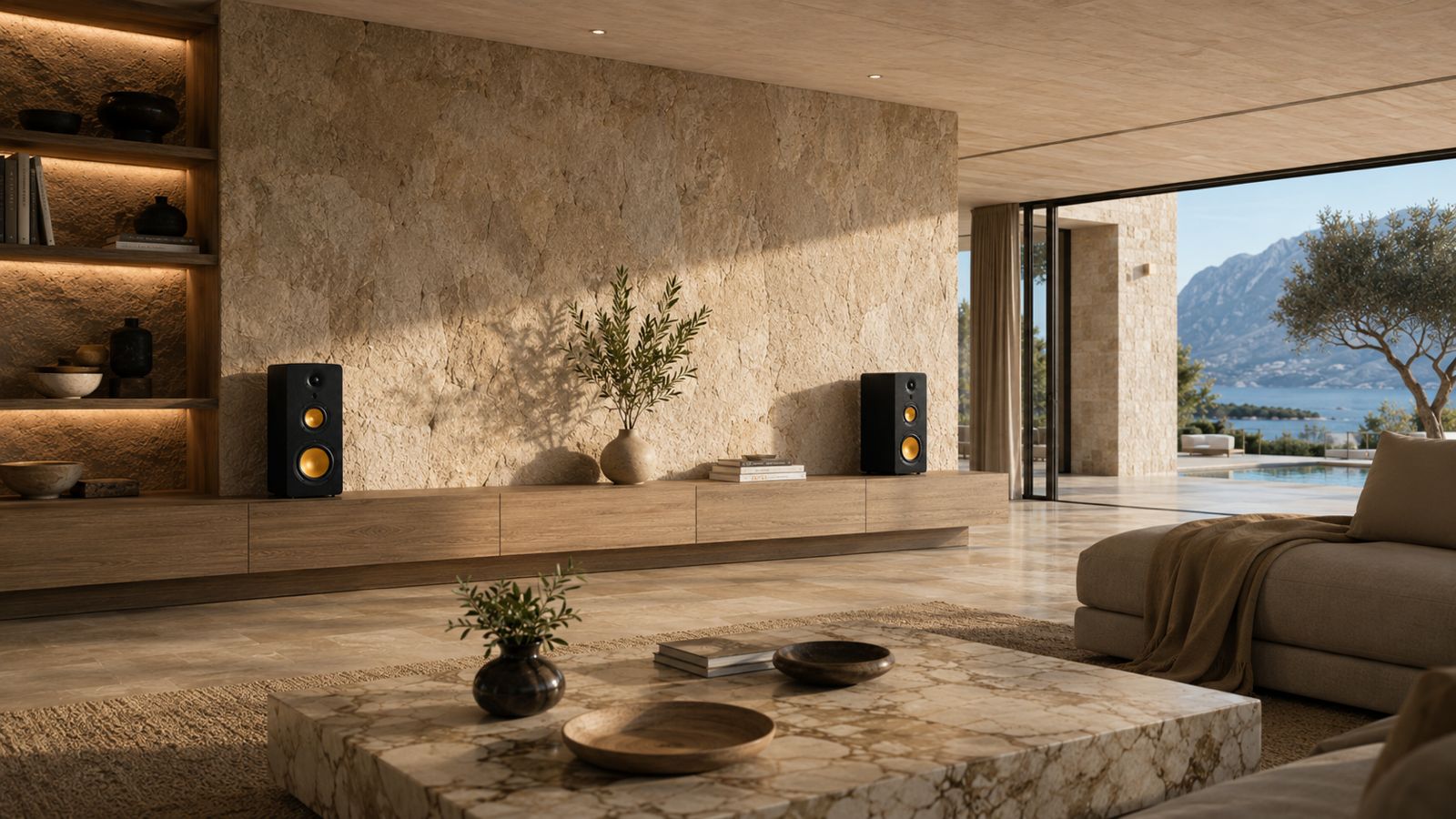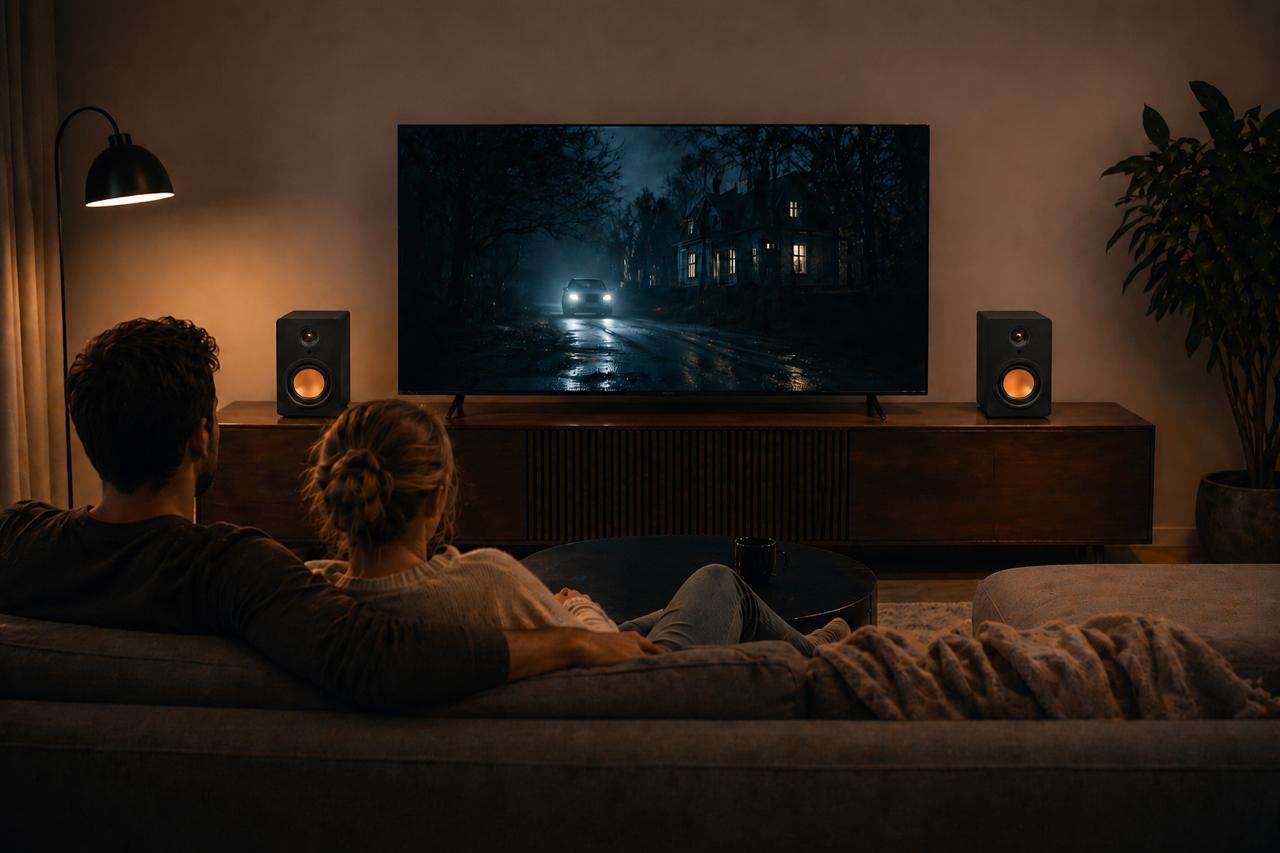

Intentional listening is the habit of sitting down to play music on purpose, usually a whole album, with nothing else competing for your attention. It is coming back because endless background streaming has made music easy to have and hard to hear. The vinyl revival is the most visible sign, but the underlying shift is simpler: people want listening to feel like an event again.
This piece looks at why that shift is happening, why a physical ritual changes how closely you listen, and how to set up a listening session and a system that rewards the attention you give it.
From background streaming to deliberate listening
Streaming solved access. Almost any recording is a tap away, and playlists will fill the silence for as long as you let them. That convenience is real, and few people want to give it up.
The cost is attention. When music is always available, it tends to become wallpaper: something playing in the kitchen, in one ear on the commute, behind a laptop. Tracks are skipped after a few seconds. Albums are broken into singles and shuffled among strangers. You hear a great deal of music without really listening to much of it.
Intentional listening is the counterweight. It doesn't replace streaming. It sits alongside it, the way cooking a proper meal sits alongside grabbing a sandwich. Same food, different experience.
The vinyl revival: the visible sign of a wider shift
Vinyl is where this change shows up most clearly. In the UK, record sales have grown year on year for well over a decade, from what looked like a niche for collectors into a steady part of how people buy music. Record shops have returned to high streets, new pressings of classic albums sit alongside new releases, and turntables are back in living rooms that haven't had one for a generation.
What makes this interesting is that many of the people buying records also stream. They are not choosing an old format out of necessity. They are choosing it because it asks something of them, and gives something back. A record is a commitment to a whole side of music, in the order the artist intended, and that commitment is the point.
Why a physical ritual changes how you listen
Attention follows effort. When starting music takes a few deliberate steps, you are far more likely to stay with it once it begins. With a record, those steps are small but they add up: sliding the sleeve out, placing the disc on the platter, cleaning off the dust, then lifting the tonearm and lowering it into the lead-in groove.
That sequence works like a threshold. By the time the needle drops, you have already decided to listen. The sleeve in your hands gives you artwork, credits and lyrics to read. And roughly 20 minutes later, the side ends and you have to get up to turn it over, which is a natural moment to notice what you have just heard.
You can build a similar ritual with any source. Choosing one album in advance, closing other apps and sitting in a set spot all carry the same signal. Vinyl simply makes the ritual unavoidable, which is why it has become shorthand for listening with intent.
How to listen to an album properly
Active listening is a skill, and like most skills it improves with a little structure. A good listening session needs about 45 minutes and a few simple conditions.
Play the whole album. Start at track one and let it run. Albums are sequenced deliberately: the pacing, the quiet moments and the transitions are part of the work.
Put the phone away. Not face down on the arm of the sofa. In another room, or at least out of reach. Every notification pulls you out of the music, even if you ignore it.
Sit in the sweet spot. The best seat is at the point of an equilateral triangle formed with your two speakers, with the tweeters at ear height. From there, the stereo image locks into place and you hear the arrangement as it was mixed.
Choose a sensible volume. Loud enough that quiet details are clear, not so loud that it becomes tiring. If you have to raise your voice to talk over it, turn it down a little. Ears fatigue quickly at high levels, and a long session should feel restful.
Dim the room. Lower lighting reduces visual distraction and helps you focus on what you hear.
Listen for one thing at a time. On a first pass, follow the vocal. On another, follow the bass line, or the drums, or the space around the instruments. You will find details you have never noticed in songs you have heard a hundred times.
Don't treat it as homework. One focused album a week is enough to change how you hear music the rest of the time.
What system qualities reward close attention
Background listening forgives almost anything. Focused listening does not. When you are paying attention, three qualities matter more than any headline feature.
Real stereo imaging
Most recordings are mixed on two speakers set apart, with the vocal placed in the centre and instruments spread across the space between. Two separate speakers, properly positioned, recreate that layout. You can point to the guitar on the left and the piano on the right, and the singer sits in the middle with nothing physically there. A single box, however clever its processing, cannot separate left and right by more than its own width.
Low distortion
Distortion is anything the system adds that wasn't in the recording. At low levels you may not hear it directly, but you feel it as listening fatigue: the urge to turn down or leave the room after half an hour. A system with low distortion (measured as THD, total harmonic distortion) lets you listen for longer without that strain.
Honest power
Music has peaks. A drum hit or an orchestral swell can demand many times the average power for a split second. Amplification with genuine headroom handles those peaks cleanly, without compressing or harshening them. That is why continuous (RMS) power ratings matter more than peak figures, which describe what an amplifier can manage only for an instant.
Starting a record collection
You don't need hundreds of records to enjoy vinyl. A small collection you know well will give you more than shelves of albums you never play.
Start with albums you already love. Records you know by heart are the best way to hear what a system and a format bring.
Visit a local record shop. Staff recommendations and browsing the racks lead you to music an algorithm would never suggest.
Check second-hand records carefully. Look at the playing surface under light for deep scratches and warping. Light surface marks often don't affect playback.
Look after them. Store records upright, keep them in inner sleeves, handle them by the edges and brush off dust before each play.
Buy one at a time. Give each new record a few proper listens before the next. It's the same principle as the session itself: fewer things, more attention.
A system built for the ritual
The uStream TT1 is a belt-drive turntable designed around that ritual. It is manual start: you lift the tonearm and lower it onto the record yourself, which is exactly the moment that turns playing music into choosing to listen. At the end of a side, auto-stop halts the motor. It carries an Audio Technica AT-3600 moving magnet cartridge on an aluminium tonearm with anti-skate and an adjustable counterweight, a built-in switchable phono preamp, and both Bluetooth and RCA outputs, so it plays through any uStream speakers or your existing amplifier.
If you are starting from nothing, the uStream Groove puts a complete vinyl system in one box: a belt-drive turntable with an Audio Technica AT91 cartridge and built-in preamp, streaming wirelessly to two bookshelf speakers at 35W RMS each (70W RMS for the pair). There are no cables between the deck and the speakers, and like everything in the range, it comes with a 2-year warranty.
Frequently asked questions
What is active listening in music?
Active listening means giving music your full attention: no multitasking, a whole album or side, and a good seat between the speakers. It is the opposite of music as background.
Why is vinyl making a comeback?
Many buyers also stream. Records offer something different: artwork to hold, albums played in order and a ritual that makes listening feel deliberate.
Do I need a separate phono preamp for a turntable?
Not if the turntable has one built in, as the uStream TT1 and uStream Groove do. A switchable preamp also lets you use an external phono stage later if you want to.
How long should a listening session be?
One album, usually 40 to 50 minutes, is ideal. It is long enough to settle in and short enough to keep your attention the whole way through.
To get the most from your seat, read our guide to getting a solid centre image, or find out why stereo still matters for music at home.